Hindu Oppression in Hindu-Majority India
(Hindu
Oppression in Hindu Majority India’s Christian-majority Meghalaya State of
Northeast India)
https://bartalipi.in/details/332/Meghalaya-Hindu-Bengalis/
Bartalipi Bengali Newspaper
সিএএ-র জের! মেঘালয়ে কার্যত পণবন্দি কুড়ি হাজার হিন্দু বাঙালি
• অরিজিৎ আদিত্য
•
অক্টোবর ৩, ২০২০
(Internet Translated version)
Bartalipi Bengali Newspaper, India

After CAA! Twenty thousand Hindu Bengalis are practically hostage in Meghalaya
Arijit Aditya
October 3, 2020
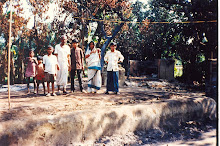
It will be seen in the future whether the citizenship law can give citizenship to the refugee Hindu Bengalis or not. However, if you want to see how the so-called Bhumiputras of Bengali Hindus, who have been living in the North-East for several generations, are beating them with their hands and rice, visit Ichhamati or Bholaganj. Twenty-two thousand Bengali Hindus from more than eight thousand families in these two small towns adjoining Bangladesh in Meghalaya have been practically held hostage for the last seven months. The oppression of several NGOs and student organizations in Meghalaya has not only cut off their livelihood, but also led to a food shortage due to the indifference of the state government. Although unlocking has started across the country, inter-district transport has not yet started in Meghalaya, so the cries of about 8,000 Bengali Hindu families in Ichhamati, Bholaganj, Kalibari and Kalatek could not reach the ears of CAA supporters. As a result, even after living in this country for seven generations, the Bengalis of Bholaganj are cringing with the tag of 'Bangladeshi'.

One such Bengali Hindu from Bholaganj said on his mobile phone on condition of anonymity that his life has come to a virtual standstill since February 28. Bholaganj is less than one kilometer away from Bangladesh. Ichhamati is roughly three kilometers. Bengalis of these two plain villages exported limestone to Bangladesh. There are one and a half hundred exporters and suppliers, all of whom are Bengali Hindus. Muslims and big workers were brought from Assam to dig limestone. There are other businesses centered on the limestone business, including market stalls and shops. Life goes on.
The Khasias had wanted to enter the business before, but had not been able to do so. But the life of the Bengali Hindus of Bholaganj, Ichhamati, Kalibari and Kalatek, who have been living in this country for seven generations, began to change soon after the Centre's law was passed in Parliament to grant citizenship to Bengali Hindu refugees. Throughout the North-East, Bengali Hindu means 'Hindu Bangladeshi'. The movement against Hindu Bangladeshis started in those two small villages on the Bangladesh border in Meghalaya. Or better to say, tyranny in the name of the movement. NGOs like Khasi Student Organization (KSU), Federation of Khasi Jayantia Garo Peoples (FKJHGP), HYC, RBYF started a movement to chase away 'Hindu Bangladeshis' by marching every day. Seeing Bengalis on the streets is abusive, even violent.
A businessman from Bholaganj said a Khasia man was beaten to death in Ichhamati on February 28. The businessman claimed that Bengali Hindus were not involved in the mass beating because they lived inside the house for fear. At his suggestion, a group of workers beat the man to death, outraged by the Khasias' oppression. Hearing the screams, the Bengalis also came out with sticks at that time and the boys of the NGO made the videos and spread them on social media. From then on, on the one hand, the violence of NGOs, on the other hand, the torture of Meghalaya police in the name of investigation. A total of 8 Bengali Hindus were charged. Police arrested 26 of them. The businessman said police had released only seven people in the last seven months, while the remaining 21 were still in police custody. Not only that, they are not being allowed to take bail. In order to find out the names of those involved in the mass beating, the police arrested the Bengalis and beat them up. We have a video clipping showing how the Meghalaya police are forcing Babla Acharya, the son of the late Haripada Acharya of Ichhamati, to come up with a name.
Meanwhile, business is completely shut down. The administration is not allowing Bengali Hindus to renew their export licenses. Ration card is not being renewed. Shops are not being allowed to open. Traders have about 500 tippers or trucks for limestone export, they are closed. Many could not repay the loan, so the finance company is taking away the vehicles.
The businessman said they went to the NGOs in groups. Their plea, having been here for so long, is to at least let the business go. But the boys of the NGO have made it clear that the business has to be done in the name of the Khasias, even the vehicles have to be given to them. Hate is being spread against Hindu Bengalis by holding press conferences or posting statements or posting on social media to create pressure.
The businessman said the state government has not taken any steps so far to bring the situation under control. The local administration is completely against the Bengalis. The only hope is the Ramakrishna Mission. The state government has not provided any relief to the Bengali-dominated districts since the lockdown began. One week before the end of the first phase of lockdown, the mission distributed 25 kg of rice, 4 kg of pulses and sugar to each family. Allegedly, the local Bengalis met the district magistrate of East Khasi Hills and the officer of Sohra sub-division and applied for permission to bring food through personal acquaintances, but it was rejected. If the mission is not allowed, these people will die without eating, say the locals.
Meanwhile, the head of the village said that the money would be distributed through the labor union, but the male members of each family would have to bring their voter ID cards and accept them. The men of the house did not want to go in fear, the women went, but they were not given relief, it was made clear that they would not be given if no one came. As a result, no one got a penny. Now their kitchen storage is empty. Bengali Hindus complain that the district administration has not taken any action yet. Local MLA Balajid Cooper Sinrem, son of former state chief minister Don Cooper Roy, did not inquire even once. The government has practically left the entire responsibility of controlling the fate of these Bengali Hindu inhabited villages to the Khasi NGOs. A Bengali Hindu from the village also whispered on his mobile phone, "We have been here for seven generations, but now I understand, I can't stay anymore, I have to run away."

Meghalaya Minister
Of course, not only the Bengalis of Ichhamati or Bholaganj will have to flee, but in fact the process of leaving the land of the Bengalis from the whole of Meghalaya is going on. Now it has started more vigorously. Manas Chowdhury sees it in front of his eyes every day. Manas Chowdhury is one of the faces of the Bengali society in Meghalaya. He was even the education minister of Meghalaya. He also got Padma Shri. His Shillong Times is a leading magazine in Meghalaya. Manasbabu said, the situation is very bad. He knows the news of Bholaganj. He knows how Bengali Hindus have been harassed for the last seven months in the wake of a mob lynching. But he does not see the way of their salvation in today's Meghalaya. The Central Puja Committee bought rice pulses and sent them to Ichhamati through Ramakrishna Mission. Manasbabu also heard that many Bengalis have been detained at the police station and are not being allowed to take bail.
Manasbabu said, Bholaganj, Ichhamati plains area, Bengalis have been here since the British period. These are very hardworking people. But they have no personal freedom. In the eyes of the Khasias, they are 'Dakhar'. Foreign. Several of these Bengali Hindus do not have voter ID cards. They did not even try for fear of the Khasias. Manasbabu made an attempt while being a MLA. However, he could not do anything from Shillong. Later, he took the initiative to arrange voter cards with them. But the local Khasias, on hearing the news, made it clear to the Bengalis that they could go to Joai, but could not return back to the area. Yes, no one dared.
Mr. Manas said the picture is the same in the whole of Meghalaya. There is no one of the new generation. Once the Bengalis were the majority in Shillong, now the Bengalis have come down to number four. In the last ten years, more than 40 per cent of Bengali Hindus have sold their homes in relatively safe Shillong. A few days ago, Mr. Manas counted on his fingers that at one time there were about four hundred Bengali families in Laban area, but now there are not even fifty houses. 'Tell me why? What is the future of the Bengalis of Meghalaya? No job. Not allowed to do business. So how do people live? ' Helpless question of the former MLA. "We have to fight and live here," he said. But the Bengalis here do not have the courage to fight. Because there is no one beside him. Mr. Manas gave an example. There are 40/50 Punjabi families in Shillong. There was a conspiracy to evict them began. But the Punjabis stood up with swords. The ministers and MLAs came running from Punjab. No one else hurt them. 'But who will come running for us, tell me? Even if we consider West Bengal as our own, they will never come to our side. Never stood by. As a result, we do not have the courage of the Punjabis.
Mr. Manas, however, said that not only Bengalis, but also people from the plains are not tolerated in Meghalaya. Since Bengalis are more in number, they are soft targets. He thinks that this hostile attitude of the Khasias against the Bengalis was imported from Assam. Mr. Manas said that before 1969, there was not so much Bengali hatred in Meghalaya, Bengali-Khasias used to live in harmony. But after the anti-Bengali movement started in Assam, it spread rapidly in Meghalaya as well.
The question is, for the protection of Bengali Hindus, to give them citizenship, the BJP government at the Center has brought in the Citizenship Amendment Act. Can't this law protect Bengali Hindus? Mr. Manas clearly said, there will be no benefit from CAA. He said that even after fulfilling all the conditions of the Election Commission, many Bengalis who have been living in Bholaganj Ichhamati for several generations could not get their names in the voters list. If you sit in Delhi and make a law, you will not have to understand the ground reality. If Narendra Modi or Meanwhile, 'We are Bengalis' has written a letter to Chief Minister Conrad Sangma demanding security for the Bengalis on the Bangladesh border in Meghalaya. The organization's secretary Sadhan Purkayastha asked Conrad, "Isn't Meghalaya a state of India?"
Exactly the same question was heard a few days ago. Even in the face of Rajdeep Roy. Barak bus passengers were harassed in Ratachara. In this context, Mr. Rajdeep said this to the media.
BJP government at the center, BJP's ally government in Meghalaya. Can't the BJP leaders in Barak (valley) do in the right thing? Let's hope so. For now.
Amit Shah himself can come and camp here and name the Bengalis, then maybe something can happen. But what will happen one day? Not possible?